

Why Many AgTech Startups Fail… Even With Working Products ?
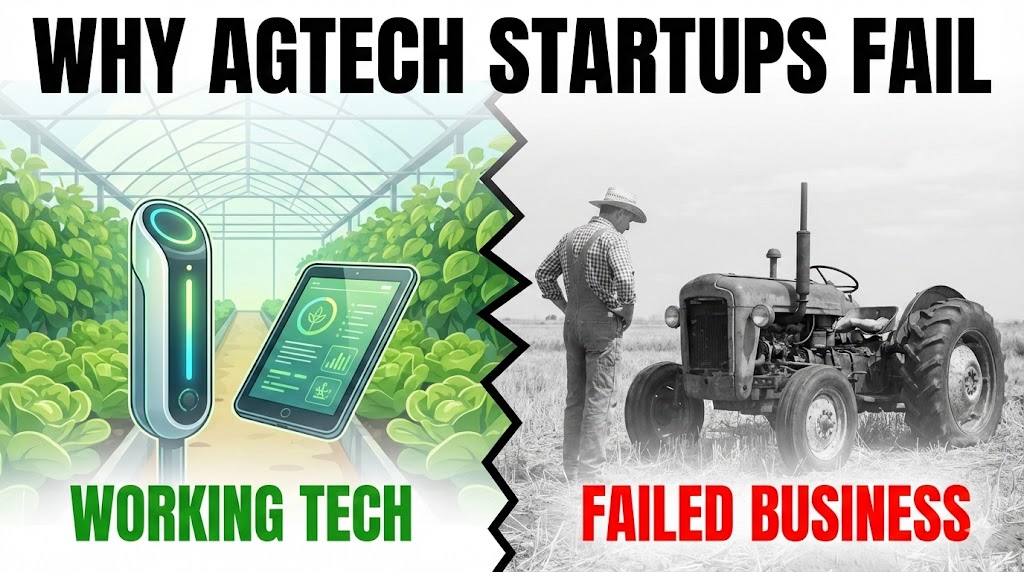
Despite having functioning products, a lot of agricultural technology startups struggle to succeed. The real reason isn’t poor engineering — it’s that they never truly connect with the actual needs and buying behavior of farmers.
1. False Signals from Early Conversations
Founders often interpret farmers’ polite interest in prototypes as real market demand. But nods and casual comments during demos don’t always mean someone will pay for a product.
2. Misleading Customer Feedback
Farmers may say a solution looks useful, but when it comes to paying real money — especially before a planting or harvesting season — interest disappears. That means startups are building based on opinions, not actual buying behavior.
3. Design Doesn’t Match Daily Reality
Even if a product solves a real problem, it might not fit farmers’ workflows or priorities. A tool that slows down work or complicates the process — even if technically impressive — won’t get used.
4. Business Model Mistakes
Many agtech startups adopt pricing that doesn’t match agricultural economics — e.g., requiring upfront payments when farmers only get income after harvest. This misalignment makes it tough for small farms to afford or justify the purchase.
The Core Insight
Successful agtech isn’t just about building cool products. It’s about proving real value, understanding how farmers actually buy and use tools, and designing solutions and pricing that fit their cash cycles and operational realities.

Farm security cameras are increasingly used to monitor entrances and detect intruders. While these systems improve safety, they also...
Read More
The Problem: Monitoring Farm Entry Without Surveillance This year at AI Sense, I had the opportunity to work on my...
Read More
AI is reshaping the way we grow, harvest, and distribute food. From AI-driven supply chain management... AI is reshaping the...
Read More